“Unbreakable” Quantum Sensors That Withstand Extreme Pressure Could Pave the Way for New Technologies


The University of Washington has developed boron nitride-based quantum sensors that can endure pressure 30,000 times that of the Earth’s atmosphere. The new technology may revolutionize high-pressure physics.
Despite recent advances in quantum technologies, one of the biggest problems in the field remains unresolved: reliably measuring quantum behavior under extreme pressure. Research has been significantly limited until now because sensors used previously could not withstand these conditions. However, a new study led by the University of Washington points to a development that could radically change this situation. Researchers announced that new quantum sensors made from boron nitride can withstand pressures up to 30 GPa (30,000 times the Earth’s atmosphere).
According to the study published in Nature Communications, these sensors can measure the magnetic field, stress, and other physical changes in materials exposed to extreme pressure with quantum sensitivity. This technology is seen as a groundbreaking step, both in understanding the behavior of matter under high pressure and in the development of new quantum devices.
The Limit of Diamond Sensors Surpassed: The Solution is 2D Boron Nitride

The research team had previously developed similar quantum sensors by creating atomic vacancies within diamond crystals. However, the three-dimensional structure of diamonds limited the accuracy of measurements by creating a distance between the sensor and the material being studied. The new method eliminates this disadvantage.
Scientists created controlled vacancies by bombarding layers of hexagonal boron nitride (hBN), which are only a few atoms thick, with a neutron beam. The resulting atomic vacancies convert electron spins into a measurable quantum signal. Thanks to the sensor’s two-dimensional structure, the distance between the sensor and the material being studied can be reduced to less than a nanometer. This provides a significant advantage compared to diamond-based sensors.
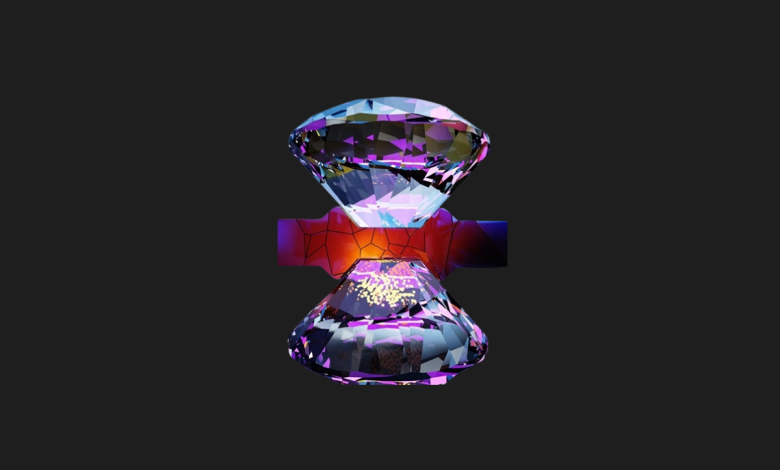
Despite this, the diamond still plays a key role in the system. Researchers use a diamond anvil cell, consisting of two diamond surfaces, to generate the high pressure. The boron nitride sensors placed inside this setup make it possible to operate at pressure levels that no quantum measuring device has previously been able to withstand.


You Might Also Like;